

If you regularly ask, “Why do I wake up feeling anxious?”, several factors could be involved. Your body naturally becomes more alert after waking, but stress, poor sleep, difficult life circumstances and anxious thought patterns can make this transition feel overwhelming. A calming morning routine, better sleep habits and professional support may help you manage these feelings.
Waking up with anxiety can be unsettling, especially when there is no obvious reason for it. You might open your eyes with a racing heart, tense stomach or immediate sense of dread before the day has even begun.
Although morning anxiety is not a diagnosis by itself, it is a real experience that can affect your mood, concentration and ability to begin the day.
Morning anxiety is a term used to describe stress, nervousness or worry that feels particularly strong during or shortly after waking.
For some people, it fades once they get out of bed and begin their routine. For others, the feeling continues throughout the morning or remains for most of the day.
Morning anxiety can be connected to a specific concern, such as work, finances, health or an upcoming event. However, it can also feel as though it has appeared without a clear trigger.
Morning anxiety can affect both your thoughts and body.
Common symptoms include:
These symptoms can also have causes unrelated to anxiety. Therefore, speak to your GP if they are new, severe, persistent or causing you concern.
There is rarely one single explanation for waking up with anxiety. Your symptoms may be influenced by several physical, emotional and lifestyle factors.
Your body follows an internal daily rhythm that helps regulate sleep and wakefulness. Cortisol, a hormone involved in alertness and the stress response, naturally increases around the time you wake up.
This is sometimes known as the cortisol awakening response. Its purpose is to help prepare your mind and body for the day.
However, if you are already under pressure or prone to anxiety, the normal transition into wakefulness may feel uncomfortable. You might notice a racing heart, tension or worried thoughts soon after opening your eyes.
Cortisol should not automatically be treated as the sole cause of morning anxiety. Sleep quality, stress levels, health and daily habits can also contribute.
Going to sleep does not always switch off stress.
If you are worried about work, family, money, health or a relationship, your concerns may be waiting for you when you wake up. Your mind may immediately begin reviewing everything that needs to be done or everything that could go wrong.
This is known as anticipatory anxiety: worry about a future event or situation before it happens.
If this sounds familiar, our guide on how to stop overthinking explains how to identify and challenge repetitive thought patterns.
Sleep and anxiety can affect each other.
Anxiety may make it harder to fall asleep or stay asleep. In turn, inadequate or disrupted sleep can make it more difficult to regulate emotions and cope with stress the following day.
Signs that sleep may be contributing include:
Improving sleep will not resolve every cause of anxiety. However, a consistent routine can give your body a more stable foundation.
The first few minutes of your day can influence how the morning feels.
A harsh alarm, repeatedly pressing snooze, immediately checking work emails or scrolling through upsetting news can activate a sense of urgency before you have fully woken up.
Rushing can make this worse. If you wake up late and immediately need to make decisions, find belongings or respond to messages, your mind may quickly become overwhelmed.
Caffeine is a stimulant. It can increase alertness, but it may also intensify nervousness, shaking, stomach discomfort or a noticeable heartbeat in some people.
If you wake up anxious and immediately drink strong coffee or an energy drink, pay attention to whether your symptoms become worse.
You do not necessarily need to avoid caffeine completely. However, reducing the amount or waiting until after you have eaten may help you understand how it affects you.
Alcohol can initially make you feel sleepy, but it may reduce sleep quality and cause you to wake during the night. Some people also experience increased anxiety as the effects of alcohol wear off.
If morning anxiety is noticeably worse after drinking, alcohol may be contributing through disrupted sleep, dehydration or changes in mood.
Past experiences can influence how your nervous system responds to stress.
If you have experienced trauma, loss, rejection or a period when mornings were consistently stressful, your body may have learned to associate waking up with pressure or danger.
This does not mean every case of morning anxiety is caused by trauma. However, unresolved experiences may be worth exploring with an appropriately qualified professional.
Persistent morning anxiety may occur alongside generalised anxiety disorder, panic disorder, depression or other mental health difficulties.
Physical health conditions, hormonal changes, sleep disorders and medication side effects can sometimes produce symptoms that feel similar to anxiety.
For that reason, avoid diagnosing yourself based on a blog. Speak to your GP if the symptoms continue, affect daily life or have appeared after starting or changing medication.
Morning anxiety describes when the symptoms occur. Generalised anxiety disorder, often shortened to GAD, is a recognised condition involving persistent and difficult-to-control worry that affects daily life.
| Morning anxiety | Generalised anxiety |
|---|---|
| Strongest shortly after waking | May occur throughout the day |
| May relate to the day ahead | Often involves several areas of life |
| May improve once the morning begins | Can remain persistent |
| Can occur during temporary stress | Usually continues over a longer period |
| Is not a diagnosis by itself | Is a recognised anxiety disorder |
Experiencing morning anxiety does not automatically mean you have GAD. A healthcare professional can assess your symptoms properly.
When you wake up feeling anxious, trying to solve the entire day from bed may increase the pressure.
Instead, try this simple routine:
The objective is not to force the anxiety to disappear. Instead, you are showing your mind and body that you can move through the morning one step at a time.
Choose your clothes, pack your bag and write down your essential tasks before bed. Reducing morning decisions can make the start of the day feel more manageable.
Try to go to bed and wake up at roughly the same time each day. A predictable routine can support better sleep and make waking feel less abrupt.
If possible, replace a harsh alarm with a softer sound or gradual light. A loud alarm can feel especially startling when your body is already tense.
Avoid beginning the day with messages, emails or social media. Give yourself time to wake up before introducing other people’s demands and information.
Drink some water and have a balanced breakfast if you can. Hunger and dehydration may make you feel physically uncomfortable, which can be difficult to distinguish from anxiety.
If your first thought is, “I cannot cope with today,” try a more balanced response:
“I feel anxious right now, but I do not have to handle the entire day at once.”
The replacement does not need to be overly positive. It simply needs to be fair and realistic.
Add one manageable and enjoyable activity to your morning. It might be listening to music, taking a short walk, having breakfast somewhere comfortable or calling someone you trust.
A routine should support you rather than become another standard you feel pressured to meet.
Consider speaking to your GP or a qualified mental health professional if morning anxiety:
Seek urgent medical help for severe chest pain, significant difficulty breathing, fainting or symptoms that could indicate a medical emergency.
If you feel unable to keep yourself safe, call 999, contact NHS 111 or call Samaritans free on 116 123.
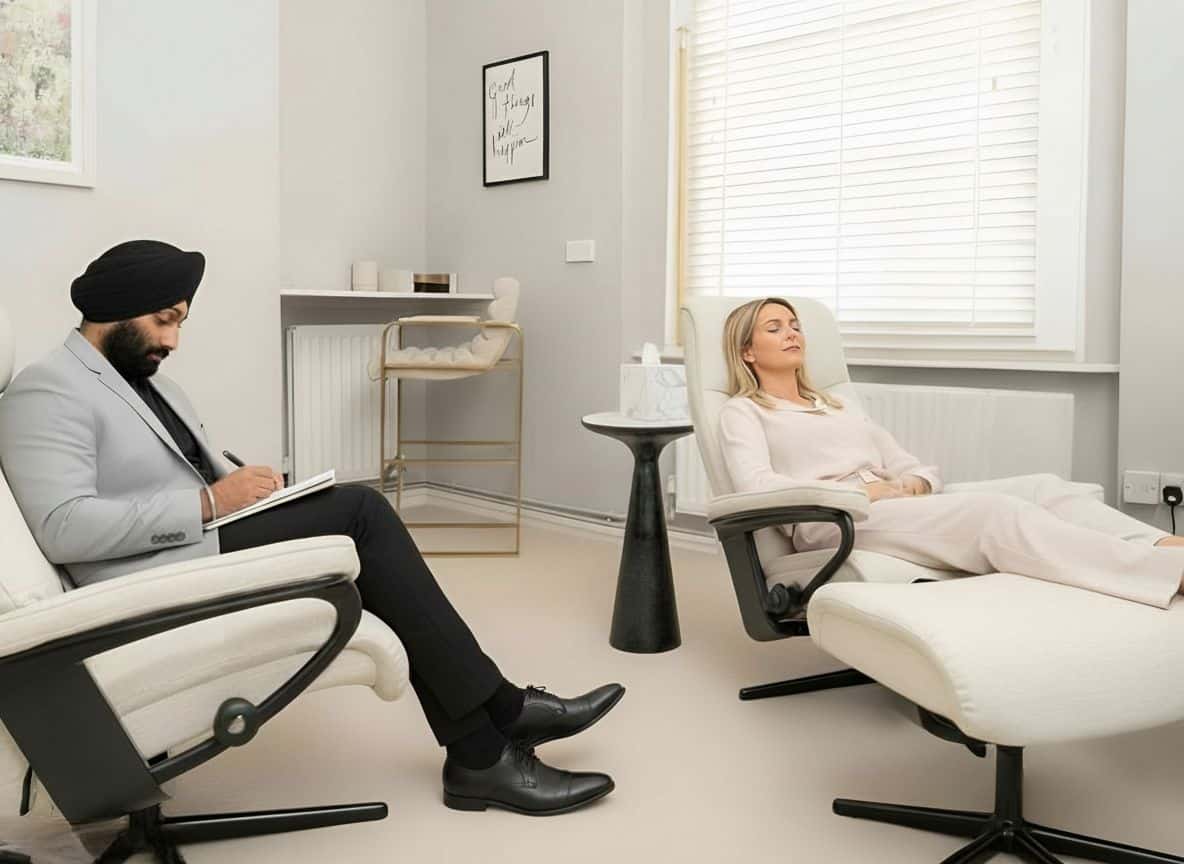
Hypnotherapy uses guided relaxation and focused attention to explore thoughts, emotional responses and behavioural patterns.
Some people use hypnotherapy alongside other forms of support to improve relaxation, build confidence and respond differently to triggers. Sessions may explore what is contributing to morning anxiety, such as anticipatory worry, work-related stress, negative beliefs or difficult past experiences.
At Platinum Mind Therapy, sessions are personalised around the individual rather than based on a generic script. Hypnotherapy is not a guaranteed cure and may not be appropriate for everyone. A consultation can help determine whether it could form part of a suitable support plan.
The cause may not be immediately obvious. Stress, poor sleep, anxious thought patterns, caffeine, alcohol or your body’s natural waking response may all contribute. Persistent symptoms should be discussed with a healthcare professional.
Your body naturally becomes more alert after waking. At the same time, worries about the day ahead may return before you have begun your normal coping routine.
Cortisol naturally rises around waking and may influence how alert or tense you feel. However, morning anxiety is rarely explained by cortisol alone. Stress, sleep, lifestyle and health should also be considered.
Avoid immediately checking your phone, slow your breathing and focus on one small task. Preparing the night before and following a consistent morning routine may also help.
Not necessarily. It can happen during temporary periods of stress. However, regular anxiety that affects your daily life may be connected to a wider anxiety problem and should be professionally assessed.
If you have been wondering, “Why do I wake up feeling anxious?”, begin by looking at your sleep, stress levels and morning habits. Small changes may reduce unnecessary pressure, but persistent anxiety deserves proper support.
Platinum Mind Therapy provides personalised hypnotherapy and mind-based therapy in Leamington Spa, Birmingham and online. If morning anxiety is affecting your sleep, wellbeing or ability to face the day, book a complimentary consultation to discuss the support available.
 Optimized by Seraphinite Accelerator